DIANA UCLM
Language: EN
Join

2025/26 · Air Cargo Challenge 2026

Eclipse

The first all-carbon-fibre aircraft. And the largest of its edition.

Wingspan
3,308 mm
Empty mass
3 kg
Payload
8 cans
Structure
Carbon fibre

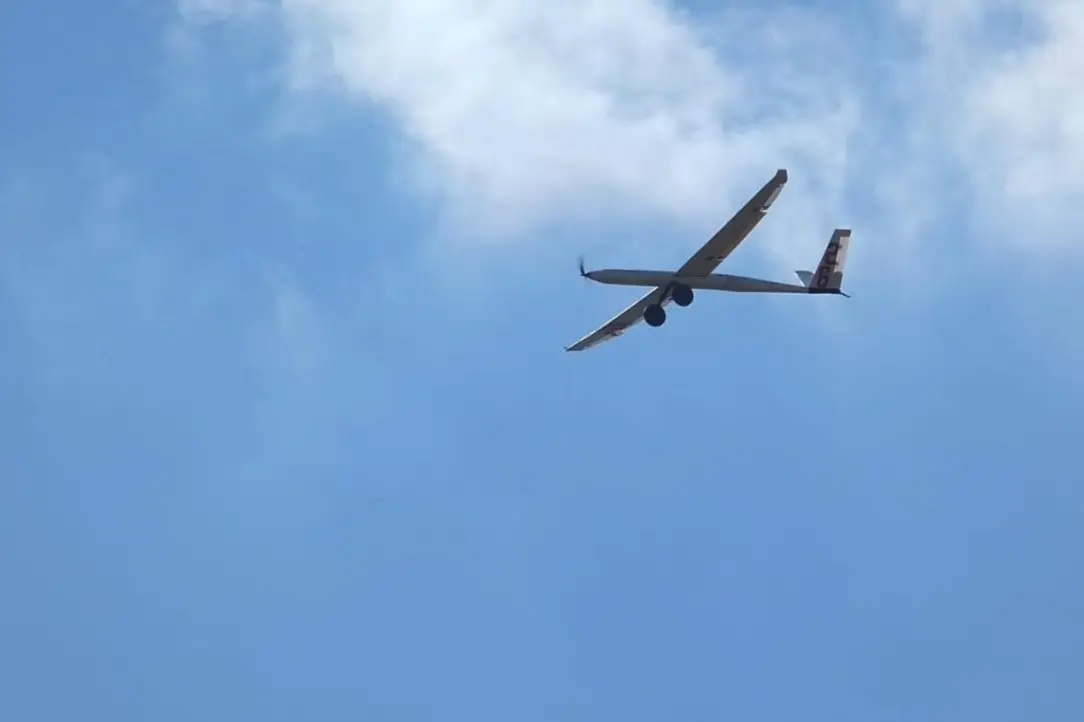
The Eclipse is the aircraft with which DIANA went international. After two editions of the XtraChallenge in Valencia, the team entered the Air Cargo Challenge 2026 in Stuttgart —Europe’s reference university competition for cargo aircraft— as team number 26, and finished 25th of 37.

It is the team’s first aircraft built entirely in carbon fibre, and the largest of its edition: a 3.3 m wingspan to carry cans with a motor and battery the rules fix for everyone. It is also the first to fly with a flight controller.

Three years, three materials

The 2026 design builds directly on the two before it. In 2024 the team won the maximum payload award with an aircraft 95 % printed in LW-PLA. In 2025 it moved to a hybrid structure of aircraft-grade wood and heat-shrink film, keeping 3D printing for the complex shapes. In 2026 the cycle focused on mastering composites, carbon and glass, with 3D-printed moulds and resin infusion.

Story

PENDING — the account of the design, the build, the flight tests and what happened in Stuttgart is told by the team. The technical report dates from May 2026, before the competition, so the result and the lessons from the final are not in it.

What went wrong and how it was fixed

PENDING

Technical data

Geometry

Wingspan3,308 mmThe technical report states 3.00 m without winglets and 3.146 m with them; that is an error in the report. The correct figure is 3,308 mm.
Root chord0.25 m
Wing area0.635 m²
Aspect ratio14.17
Incidence angle1°
PlanformSemi-elliptical, with a straight leading edge and an elliptical trailing edge, to approximate the elliptical lift distribution and reduce induced drag
ConfigurationMid-wing cantilever, no dihedral, no twist. Manoeuvrability was favoured over some stability
Wing airfoilClark Y at 9 % thicknessStarting from the standard Clark Y (11.7 %), 11, 10 and 9 % versions were generated; the 9 % proved most efficient. Initial candidates; Clark Y, E216, S23021 and SD7037.
Tail airfoilNACA 0008, for its low thickness and drag while still housing a servo inside
TailV-tail with 45° dihedral, no vertical stabiliser

Masses

Empty mass3 kg
Maximum payload8 cansIn the Air Cargo Challenge the payload is discrete and measured in cans.
Centre of gravity6.3 cm behind the leading edge empty; 7.4 cm at full load
Design load factorn = 2 at maximum take-off mass

Performance

Payload predictionIn-house MATLAB script simulating take-off with propulsion data for several propellers, in the historical summer atmosphere of Stuttgart
Cruise speedPENDINGThe report gives it as curves against payload, not as a single value.
Take-off distancePENDING

Propulsion

MotorT-Motor AT2814 900 KV (mandated by the rules)
PropellerAPC 13×8E Thin Electric, each unit statically balancedThe 13×8 and 13×6.5 performed similarly at the 30 A limit; the 13×8E was chosen once the aerodynamic prediction was factored in, for its high-rpm profile and pitch-to-diameter ratio, which keeps cruise speed within the current limit.
ESCT-Motor AT 40 A, a 25 % margin over the 30 A peak. Its BEC is disabled to isolate power from control and avoid interference
Power battery3S LiPo, around 3,200 mAhSized for a 320 s mission at 30 A with a 1.2 factor (take-off 20 s, climb 60 s, cruise 120 s, approach 120 s). 3S maximum by the rules. A twin parallel pack was rejected for weight, complexity and failure risk.
Current limit30 A, imposed by the competition rules

Systems

Flight controllerMatek H743-Wing V3 (STM32H7, integrated IMU). Flown in FBWA mode; the pilot keeps control and the controller corrects attitude
Programmed functionsElectronic current limiting at 30 A via a Hall sensor feeding back to the controller, with low-voltage warning; and a 35° roll limiter, 5° inside the 40° regulatory ceiling
Ground stationMission Planner
TransmitterRadioMaster TX16S MKII MAX (ExpressLRS), with voltage and current telemetry on screen
ReceiverRadioMaster ExpressLRS XR1 Nano, 2.4 GHz
ServosHacker/Jeti DITEX EL0315M, ~15 g and ~3.8 kgf·cm at 6 V. Minimum torque required; ailerons 1.8, flaps 3.0, ruddervators 1.0
Avionics battery3S 1,000 mAh LiPo, separate from the power battery, with a ×4 margin over estimated consumption
BusesPower and avionics kept separate

Structure and manufacturing

Wing skinCarbon-fibre lay-up with a double leading-edge reinforcement that takes most of the torsion
Main sparRohacell with carbon roving, the critical element in bending
FuselageBalsa and birch frames forming the cargo bay, with a two-ply carbon skin reinforced with 20 strands of longitudinal 12k roving. Five carbon rods run through the frames and keep the cans apart
MouldsTwo iterations, plaster and 3D printing. 3D printing won on reliability and precision; plaster proved fragile and laborious
Lay-upResin infusion for most parts for an even resin distribution; hand lay-up for the most complex geometries. Fibre at ±45° for torsion and shear
By partWing, infusion, 1 ply with reinforced leading edge · Fuselage, infusion, 2 plies · Empennage, infusion, 1 ply · Landing gear, hand lay-up, 2 plies
Printed partsJoints in PA-CF (carbon-filled polyamide); spacers, fixings and control surfaces in LW-PLA; wheels in TPU
BreakdownThe aircraft is split into sections to fit the transport crate