DIANA UCLM
Language: EN
Join

2023/24 · XtraChallenge 2024

Insomnio

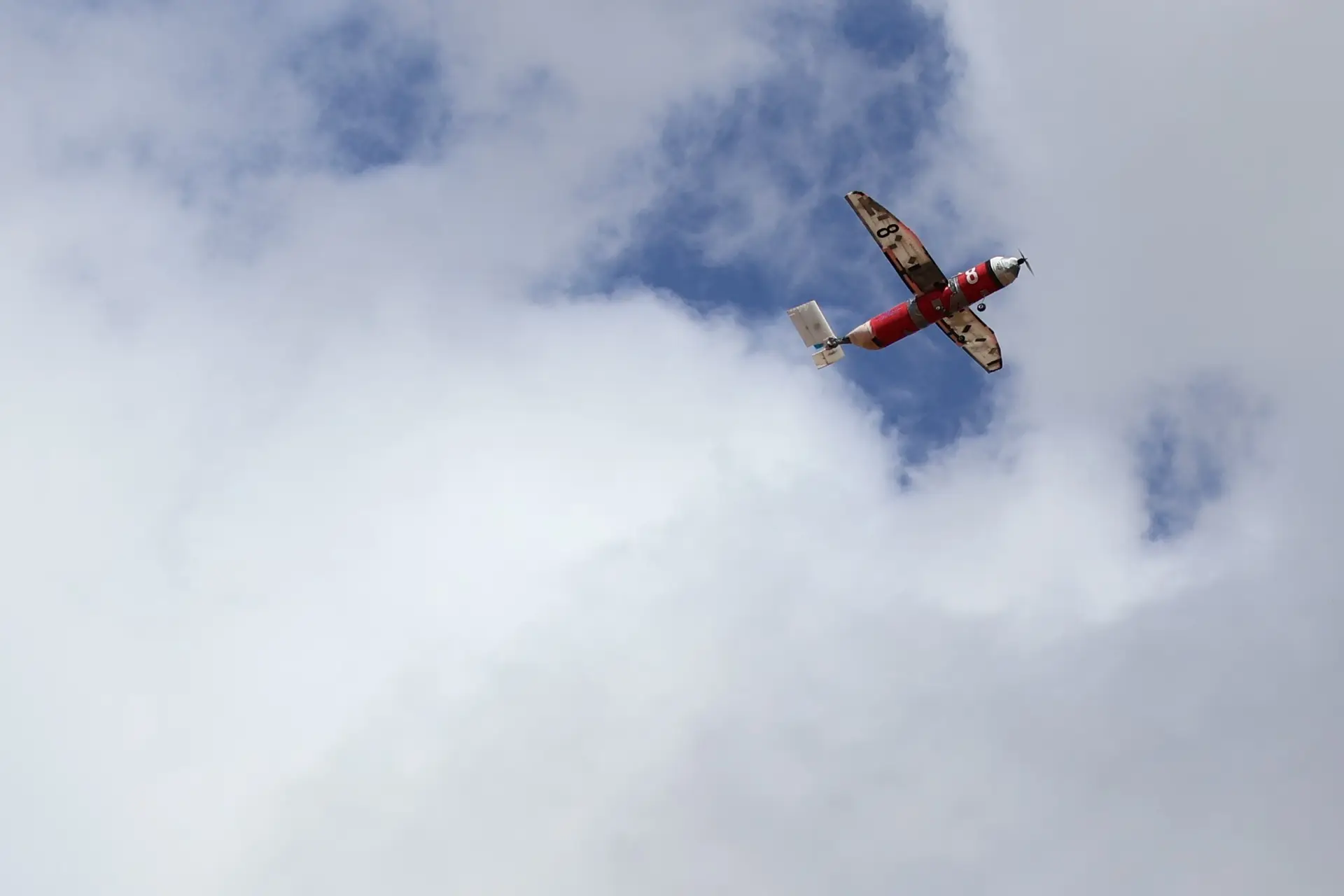
The first aircraft. Almost entirely 3D-printed, and the maximum payload award.

Wingspan
2.00 m
Empty mass
1.4 kg
Payload
200+ balls
Structure
90 % LW-PLA

The Insomnio is DIANA’s first aircraft. With it, the team entered the XtraChallenge 2024 in Valencia as team number 8, achieved its first flight and took home the maximum payload award, with more than 200 ping-pong balls on board. In the overall standings it finished last. Both things are true and both are told.

A printed aircraft

What defines the Insomnio is the material: around 90 % of the airframe is 3D-printed in LW-PLA, a foamed PLA that weighs almost half as much as the standard kind. The wings were printed with skin and internal structure fused into a single part. That approach, which the team would abandon in later aircraft in favour of wood and then carbon, is what made it possible to build a complete aircraft in the first year.

Story

PENDING — the account of the design, the build, the flight tests and what happened in Valencia is told by the team. The technical report was submitted before the competition, so it does not record the result.

What went wrong and how it was fixed

PENDING

Technical data

Geometry

Wingspan2.00 m
Wing area0.449 m²
Aspect ratio11.17
Taper ratio0.25
Mean aerodynamic chord0.218 m
Wing airfoilED216Candidates; AG17, AG19 and ED216. The ED216 was chosen for higher efficiency and a more progressive stall; the AGs were rejected as supercritical and harder to fly.
Tail airfoilAG17
PlanformSwept-back wing
TailV-tail with inverted airfoil; span 0.60 m, dihedral 20°, aspect ratio 3
High-lift devicesPlain flap. The slotted flap was rejected
Control surfacesFlaperons (ailerons and flaps share the surface)

Masses

Empty mass1.396 kg (estimated)
Actual payloadJust over 200 ping-pong balls and one billiard ballThe report predicted 1.643 kg with three billiard balls and about 423 ping-pong balls; they did not fit. The report figure is a design value, not the real one.
Maximum take-off massBetween 3 and 4 kg (report estimate)
Payload predictionPL [kg] = 0.1857 · ρ + 1.9518

Performance

Stall speedPENDING
Cruise speedPENDING
Take-off distancePENDING

Propulsion

MotorEmax GT2820 985 KV
PropellerAeronaut CAMcarbon Light 10×6Over the APC 10×6E; chosen for a better match with the thrust system and slightly higher hardness and strength.
Power batteryTattu FunFly 3S 1,300 mAh 100C
ESCPENDING

Systems

TransmitterTurnigy 9X, 9 channels
ReceiverPENDING
Control batteryGens Ace 2S 800 mAh 45C
ServosMG90S
Flight controllerNone. This was the year before flight controllers were introduced
Power supply5 V UBEC

Structure and manufacturing

ConceptAround 90 % of the aircraft 3D-printed in LW-PLA, with aluminium reinforcements. The wings have skin and internal structure fused into a single printed partXPS (extruded polystyrene) was also studied. LW-PLA won on lightness and strength.
StabilisersSame as the wings, with the AG17 airfoil
Landing gearOff-the-shelf aluminium unit
Test benchIn-house bench with a strain gauge for thrust, current and voltage sensors and a laser rpm sensor, run by an Arduino with PID control and a real-time desktop interface